
A fully automated metro system over 65 kilometres long is under staged construction in a major city and is expected to be fully open by the early 2020s. Using technology supplied by European rail company Alstom and trains manufactured in India, the stand-alone system will link suburbs with the heart of the city – but it represents also a controversial break with the past.
Sounds a lot like the Sydney Metro – but it’s also an equally accurate description of the Réseau express métropolitain (REM – Metropolitan Express Network) currently under construction in Montreal, Canada. As well as being nearly identical in length, technologies and construction timeframes, both systems are also a contentious departure from existing heavy rail practices in their host cities. Not only are they technologically incompatible with existing rail networks, they also involve the takeover and conversion of established and functional suburban rail infrastructure.
In previous posts I have compared Sydney Metro with broadly similar projects currently under construction in Australia and New Zealand, as well as with London’s Crossrail. However, the similarities between REM and the Sydney Metro are much more striking. In this post I’ll compare these projects and in part two I’ll discuss the controversies in both cities around the parallel decisions to construct stand-alone transit systems.

Montreal REM map. Source: REM website
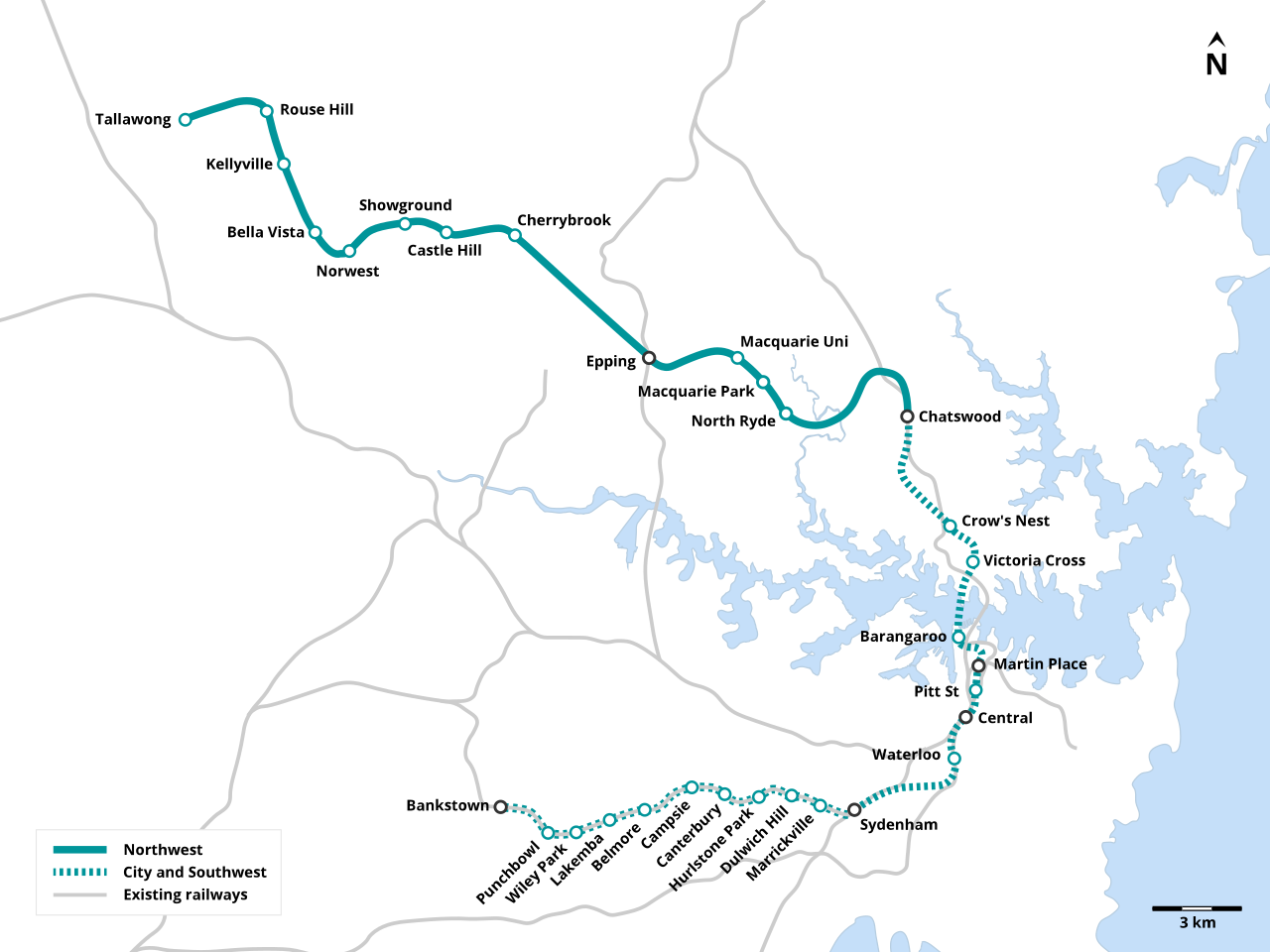
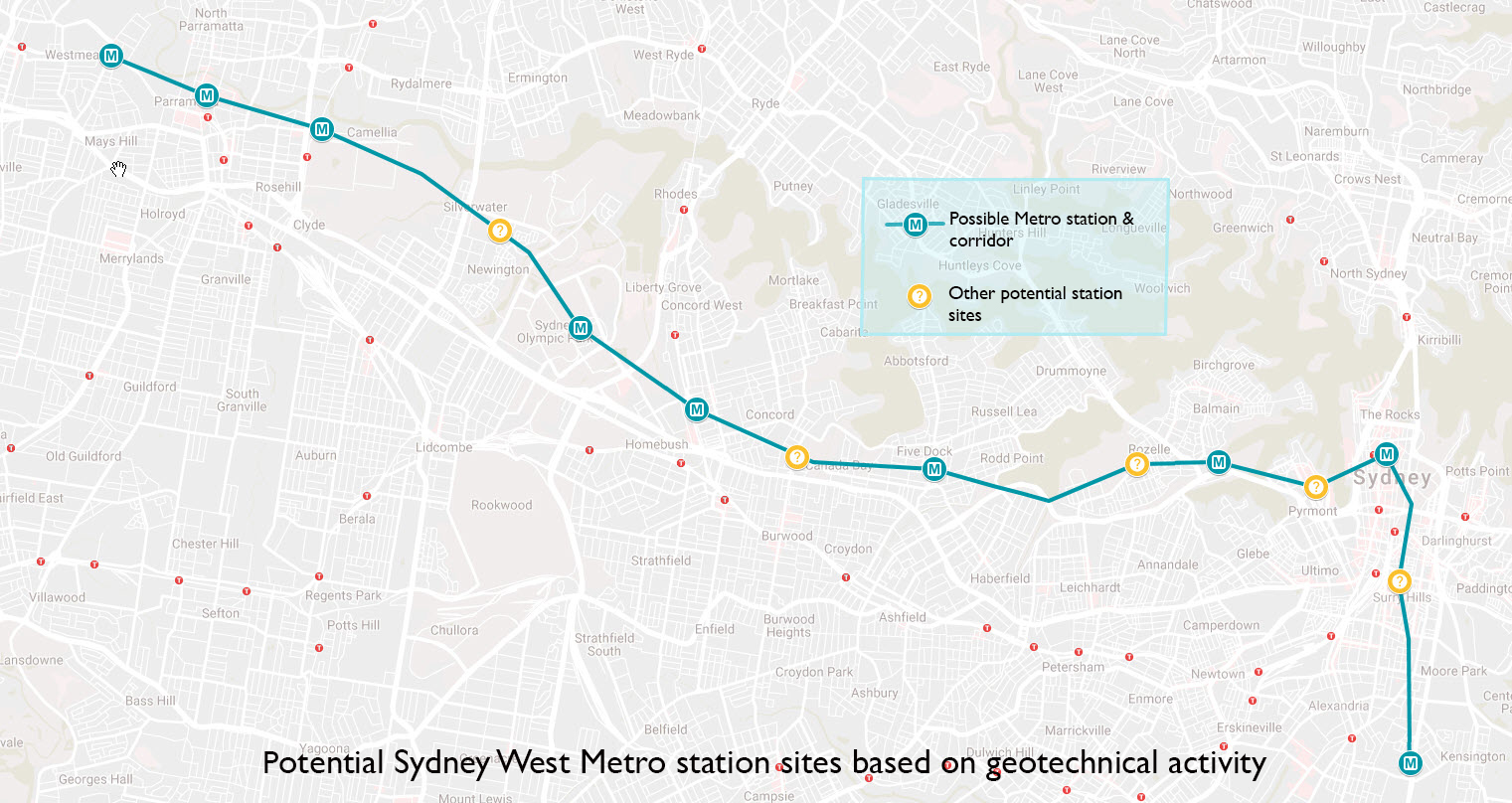
Sydney Metro. Source: Wikipedia




 StrategicMatters